
Art in the Workplace: Why Offices and Law Firms Benefit
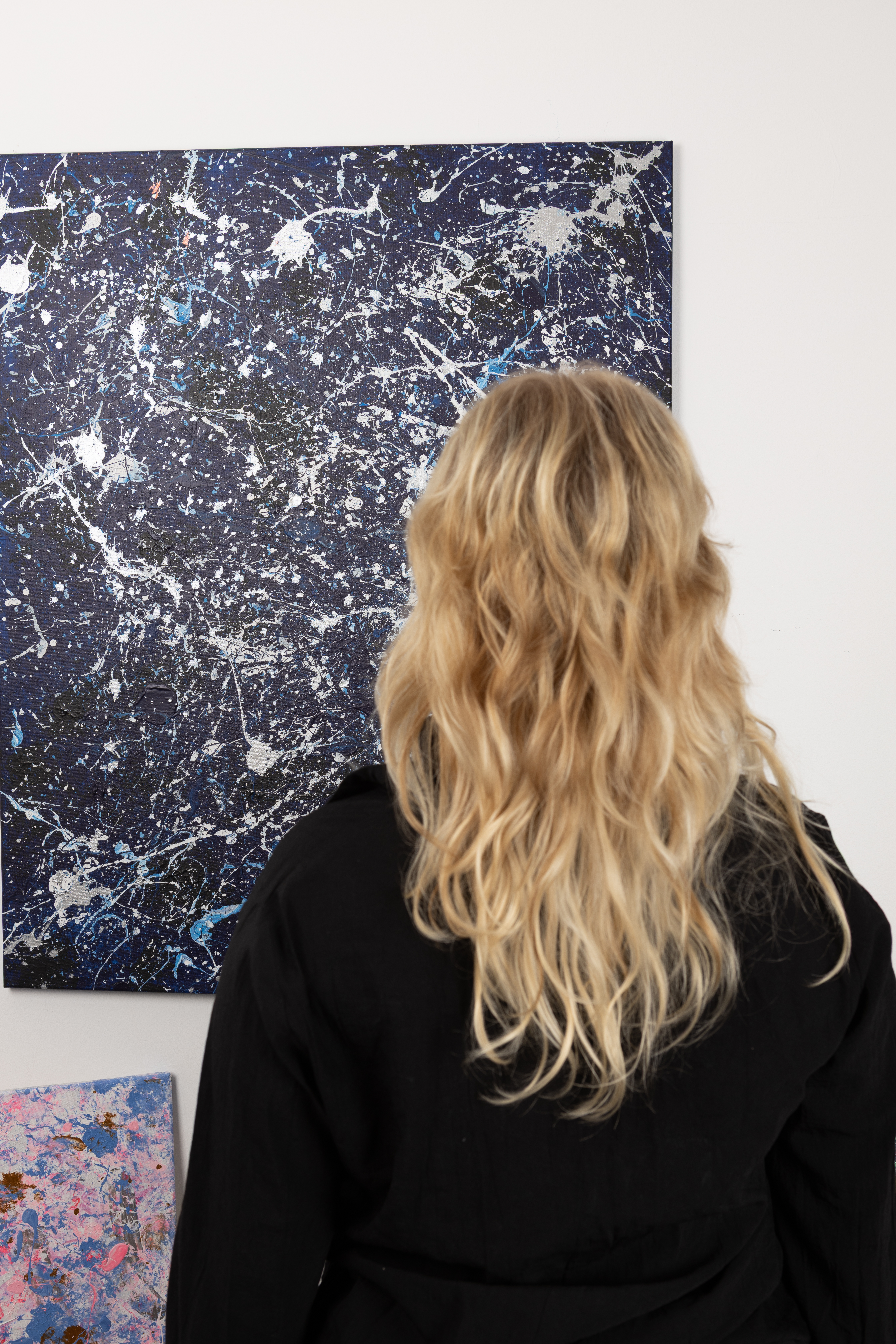
An office is never merely a functional shell. Before a conversation even begins, light, materials, proportions and walls say something about a company’s people and outlook. Art in the workplace adds another layer to this quiet language: it can give a room character, provide orientation and show that its design has been considered.
This is particularly valuable in offices, law firms, practices and other business premises. A thoughtfully chosen original does not have to demand attention. It can convey confidence quietly, turning a practical interior into a place with its own identity.
Why art in the workplace is more than decoration
Decoration fills a surface. Art opens a dialogue. It changes sightlines, creates a point of calm or introduces tension. In a restrained conference room, a large work can bring the architecture together; in a reception area, it can convey warmth; along a corridor, a series creates rhythm and connection.
Abstract art offers particular openness in offices. It leaves room for different perceptions rather than prescribing one story. Colour, texture and depth reveal themselves differently with distance, daylight and viewing angle. A work can retain its presence even when people encounter it every day.
What an empty wall says about a room
— and how art changes its effect
An empty wall can express clarity and calm. In a room planned mainly around function, however, it can feel like an overlooked decision. It does not always say ‘less is more’; sometimes it simply suggests that a point of view is missing.
Art changes that perception by giving the eye an anchor. A work can echo an interior’s colours, introduce a deliberate contrast or connect materials such as wood, stone, glass and metal.
The room then feels composed as well as furnished. The relationship is crucial: size, placement and lighting need to suit the architecture. Every wall does not need a painting, but the right work can give a particular wall its meaning.
First impressions in a law firm, office or reception area
Clients and business partners often experience a space before they can assess a service. A reception area therefore communicates more than taste. It can express precision, reliability, openness or a willingness to innovate.
Art for law firms can combine professionalism with individuality. A distinctive work can balance restraint and presence without relying on a generic hotel-lobby aesthetic. In consulting rooms and waiting areas, art also draws attention beyond practical functions. It offers a natural opening for conversation without demanding one.

How colour, size, texture and light shape a room
An artwork never acts in isolation. A warm field of colour can balance cool materials; deep blues or reds can give definition to a bright room. Vertical formats emphasise height, while horizontal works lead the eye across a space. Textured and metallic surfaces respond to changing light, adding lively depth to restrained interiors.
Good art consultation therefore starts by considering more than which colour matches the sofa. Architecture, use, sightlines, lighting and the desired atmosphere belong together. A work should relate to its setting while retaining its own identity.
Wellbeing: what research suggests — and its limits
Visual quality affects how people experience a workplace. A systematic review by Cooper and Peristeri published in 2026 brings together ten studies involving around 1,220 participants. The findings suggest that art in the workplace may support psychological comfort, satisfaction and social interaction. The authors also emphasise significant limitations: few studies took place in real offices, some examined art alongside plants, and methodological quality was mostly moderate or low.
It would therefore be too broad to claim that a painting automatically increases productivity. A subtler contribution is more plausible: art can offer a visual counterpoint, encourage conversation and invite conscious attention to a place. Earlier experiments by Knight and Haslam also suggest that participation matters. When employees can influence their surroundings, this may be associated with greater comfort, identification and satisfaction.
What businesses can take from this
Art is best understood as part of a thoughtful workplace culture rather than an isolated promise of performance. Listening to the people who use a room can inform selection and placement. At the same time, a coherent overall concept needs a clear design direction. Art can find its place where company identity, architecture and individual perception meet.
Making a company’s identity visible
Brand identity extends beyond a logo, typography and website. It is also expressed through the atmosphere visitors enter and the surroundings in which employees spend their day. An artwork can translate qualities such as courage, precision, calm or change into a sensory experience without spelling them out.
For businesses with several rooms, a connected series can create visual continuity. A single statement piece can become the recognisable focal point of a reception or meeting area. Both approaches work best when art is considered early in the interior concept.
Original art and distinctive interiors
An original carries traces of its making: layers, transitions, material edges and deliberate decisions that cannot be fully reproduced. This individuality gives a room authenticity. Where services depend on trust, expertise and personal advice, a unique work can reflect a similar commitment to care and considered choices.
Art does not need to appear dominant or expensive. What matters is that it suits its setting while retaining a voice of its own. Explore a selection of current abstract pieces on the Works page.
Which art suits business interiors?
How large should office artwork be?
Size should relate to the wall, furniture and viewing distance. A small picture can appear lost above a sideboard or conference table; in a narrow corridor, a sequence of smaller works may be more suitable.
Which colours suit a law firm?
There is no universal colour scheme for law firms. Quiet tones can support a composed atmosphere, while carefully placed contrasts express personality. Their relationship with light, materials and brand identity matters more than a fixed colour formula.
Should employees help choose the art?
Participation can be useful when many people encounter a work every day. This does not mean that every decision needs a vote. A curated concept with room for feedback can combine a clear design direction with a sense of connection.
Can commissioned art be developed for several locations?
Yes. Individual works or connected series can be developed for different rooms and locations. Recurring materials or colour references create a connection without making every setting look identical.

Individual art for spaces with a point of view
At Why Jucyy, commissioned art begins with an encounter with a space: its proportions, materials, light and the atmosphere it should hold. The aim is a distinctive original deliberately developed for its future setting.
Individual works, diptychs or connected series can be created for offices, law firms and other businesses. Discover the process on the Commissioned Art page. If you are rethinking a space or completing an existing interior with art, introduce your project through the Contact page for an initial conversation.


Comments