
What Size Artwork Suits My Room? Proportions, Viewing Distance and Impact
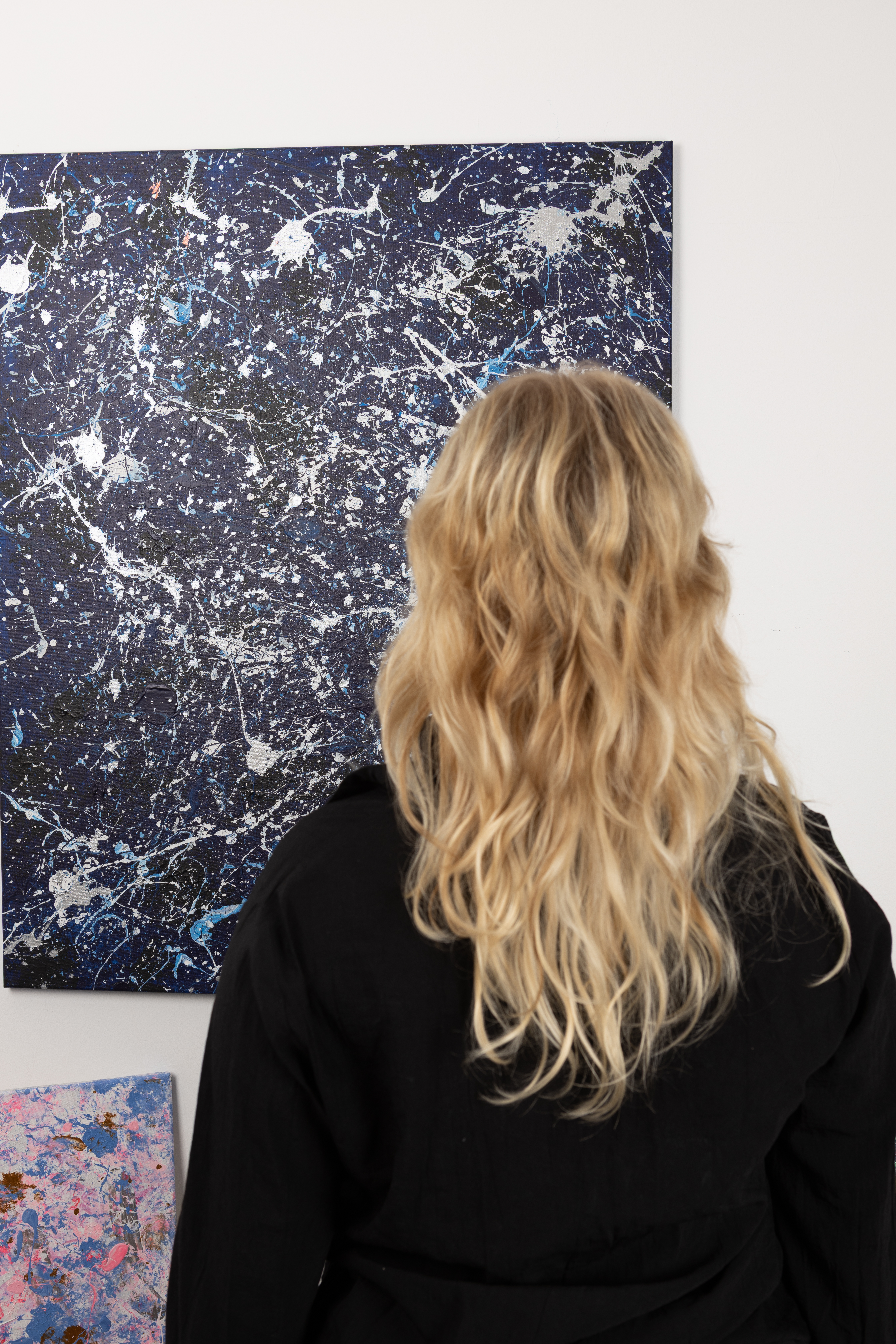
An empty wall is easy to measure. Choosing an artwork size that feels right, however, means looking at the room as a whole. Furniture, ceiling height, sightlines and viewing distance all influence how we perceive a format. A painting can become a focal point, create a quiet connection or give presence to a previously overlooked area.
Before choosing a size, it helps to take a step back: what role should the artwork play in this space? This question often offers a clearer starting point than the wall dimensions alone.
Start with the wall
A tall, wide wall offers different possibilities from a narrow space between two doors. Yet a large wall does not need to be filled as completely as possible. The space around a painting contributes to its effect. It can give a composition room to breathe and make its outlines more distinct.
Consider windows, doorways, light switches and adjoining surfaces too. A wall belongs to an architectural setting. An artwork can echo its lines or introduce a deliberate contrast. What matters is how the picture relates to the room as a whole.

Above a sofa, sideboard or bed: which artwork size works?
When a painting hangs above a piece of furniture, we often perceive the two as a group. A small work above a wide sofa can feel very understated; a large painting above a delicate sideboard can dominate the setting. Either may be intentional. Their proportions should therefore be considered together.
As a starting point, an artwork approximately two-thirds the width of the furniture can be useful. This is a design guideline rather than a fixed rule. Above a sofa measuring 240 centimetres across, for example, a picture around 160 centimetres wide could be one option to consider. Whether that relationship works also depends on the ceiling height, furnishings and the presence you want the artwork to have.
For two or more works, consider the group as a whole: the combined width of the paintings, including the gaps between them, determines their relationship to the furniture. A diptych should therefore be planned as a single composition from the outset.
Portrait, landscape or square?
Orientation changes the impression as well as size. A portrait format can emphasise a narrow wall and draw the eye upwards. A landscape format can echo a horizontal line, for example above a sofa or low console. A square work can create a compact focal point.
These effects are starting points for choosing a format. A tall wall can also benefit from a landscape painting when the space above it is a deliberate part of the arrangement. Consider different proportions before settling on dimensions.
Viewing distance and movement through the room
An artwork visible from the entrance is first perceived through its overall composition. Colour, contrast and size shape that first impression. Moving closer reveals further layers: lines, transitions, layering and the character of the surface.
Viewing distance is limited in a narrow hallway. A sequence of smaller works may suit this setting, offering individual encounters as people pass. In an open lobby or spacious living area, a larger format can create a stronger connection across the room.
There is no fixed formula for the ideal viewing distance for abstract painting. Instead, consider the actual viewpoints: from the entrance, from a seat, from the opposite room and while walking past. An artwork should be considered from the perspectives in which it will be experienced every day.
Colour, texture and light shape an artwork’s presence
Two works with identical dimensions can attract very different levels of attention. A composition with strong contrasts can have a powerful presence. A work with subtle transitions may settle more quietly into its surroundings. Size alone therefore explains only part of the effect.
Layering, texture and reflective passages play a particular role in my work. Different areas can come forward as the light and viewing angle change. When considering a format, I also look at how the artwork will be lit and which materials surround it.
An individual format for your space
As an artist based in Hamburg, I work with you at WHY JUCYY to develop the right format for your space, guided by your ideas. Together, we consider dimensions, furniture, light and the atmosphere you want to create. During a visit, I take measurements or work with those you already have. We can also collaborate using photographs and room dimensions.
I consider both the proportions of the space and the role the artwork will play. Should it create a focal point, emphasise a particular view or connect quietly with the existing materials? These considerations shape an individual artistic direction.
Find out more about working with me on my Commissioned Art page.
If you are considering different sizes for a particular wall, you can send me photographs, dimensions and your ideas through the Contact page.


Comments