
Abstract Art Does Not Happen by Chance: Intuition, Materials and Craft
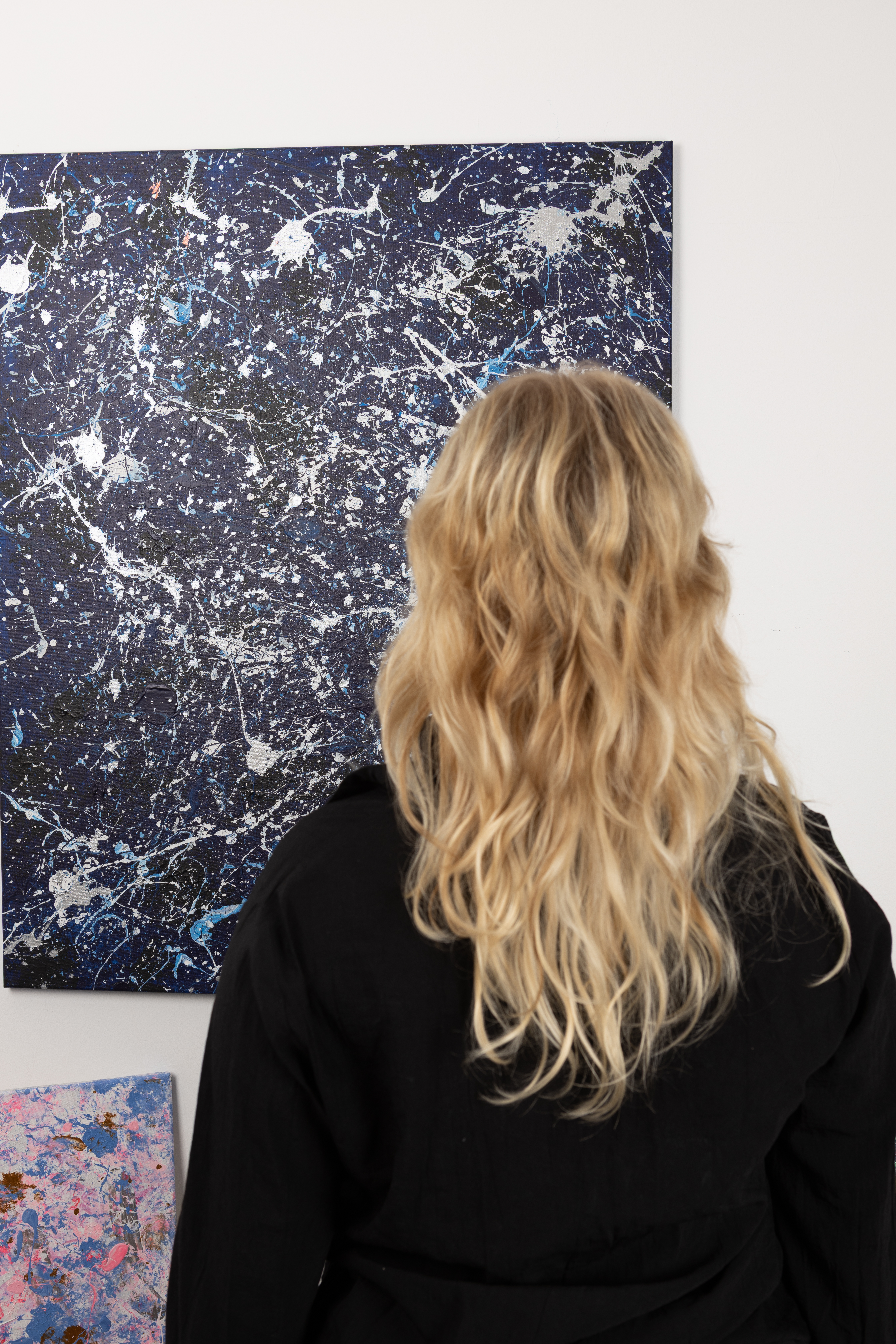
I am fascinated by people who know their craft so well that a movement looks effortless. Behind that confidence lie experience, attention and many decisions that are almost impossible to distinguish in the finished result. Historical sculpture and mural painting interest me for the same reason: developing an idea and understanding a material well enough to give it form.
I have been painting on a large scale since 2018. Over the years, I have explored techniques, colours and different paint brands in depth. My desire to keep refining my craft has grown along the way. I want to understand more precisely what happens on the canvas and how I can consciously develop a painting’s effect.

Knowing my materials gives my intuition more possibilities
Many decisions I make while painting come from an immediate feeling. A colour needs more space, a movement wants to continue, or an area calls for calm. To follow that impulse, I need to know my materials. I need a sense of how the paint will behave and what I can achieve with it at that particular moment.
I am interested in questions that may seem small at first: How much paint does a tool hold? How does a different consistency change the application? Does a mark remain distinct or merge with its surroundings? These differences affect the composition. The better I can anticipate them, the more purposefully I can work intuitively.
Why I work mainly with acrylics
Acrylics suit the way I work because their relatively fast drying demands decisions. The condition of the paint changes as I work. In my experience, there is a limited window in which I can still create certain soft transitions in the way I envisage them. Recognising that window is part of working with the material.
Drying cannot, however, be reduced to a fixed number of minutes. It depends on factors including the product, layer thickness, support and environmental conditions. A paint layer that appears dry on the surface may still contain moisture inside. This distinction is particularly important with thicker applications.
What appeals to me about acrylics is the relationship between responding in the moment and building further. I can respond to what is developing and return to it later with additional layers. The right way to rework an area also depends on the condition of the existing layer and the products used. Acting quickly and being patient both have a place.
Layers, texture and tools work together
For me, a new layer always changes the relationship with what is already there. It can emphasise an area, soften a transition or connect different parts of the painting. I therefore consider every application in relation to the whole. More material does not automatically create more depth; what matters is its role in the composition.
Modelling paste adds the character of the surface to the process. Raised and recessed areas can reveal colour differently from a smooth surface. Texture mediums vary considerably in their technical properties: how they dry, how rigid or flexible they become, and which supports they are intended for. The information for the specific product matters. A single rule for every paste would overlook these differences.
My choice of tools and the way I apply the paint are also part of the composition. A movement leaves a particular mark; consistency and dilution affect how the paint flows and spreads. Water and acrylic medium can have different effects. The appropriate addition depends on the paint, the support and the intended result. Understanding these relationships is a substantial part of the craft for me.
Painting also means taking time to look
There are stages when I act immediately and others when I spend a long time looking at a work. Sometimes I study a painting for hours, considering which areas still need a change. One particular part may hold my attention, but the central question remains how it relates to the rest of the composition.
Does a transition need a stronger connection? Is a contrast so strong that other areas are barely noticed? Where should a movement remain, and where would another layer make the painting more coherent? For me, these questions cannot be answered solely while applying paint. They need time and repeated attention to the whole.
Free gestures and precision work together. Not every movement is decided in advance. What emerges during painting is considered carefully and informs the next decisions. An unexpected mark can also find its place. Whether it stays depends on the role it plays in the painting.
What refining my craft means to me
I want to understand my materials more closely and use them with greater intention. For me, that means developing more nuanced transitions, bringing layers together more purposefully and judging the effect of a composition more precisely. That learning does not end with a successful work.
Refining my craft also means sharpening my judgement. A further change needs to serve the painting. Sometimes an area still needs attention; sometimes more work would take away something that is already convincing. I want to recognise those differences more clearly and give my own artistic language greater assurance.
My works reveal different aspects of this practice: layers, subtle shifts in colour, distinct marks and more pronounced surface textures. They are part of what I have explored over the years. You can find a selection in my overview of works.
One work in different light
These three photographs of my blue and silver work show how differently the same surface can appear in a photograph. With flash, the blue and silvery-white passages stand out vividly. In weak light from a window diagonally opposite, the work appears much darker in the photograph. The third view shows it in a room in natural daylight on an overcast day.
For me, this effect belongs to the relationship between colour, surface and surroundings. The photographs add another perspective on the composition: individual marks become more noticeable in one view, while others merge with the darker areas. This is also why I consider the light and materials of a work’s future space when creating a commission.
How this experience informs commissioned art
A commission brings further points of reference: the space, its light, existing materials and the wishes of the people I am painting for. This information gives the work a direction. My experience with colour, texture and composition helps me develop an independent painting in my own artistic style.
I have explored the spatial questions in more detail in my article on artwork sizes, proportions and viewing distance. For me, this is where they connect with the craft: an intended atmosphere needs to take shape through concrete decisions about colour, surface and layers. That calls for both an open response to the project and familiarity with my materials and tools.
At WHY JUCYY, I bring these two sides of my practice together. If you would like to commission an individual work, my commissioned art page offers an introduction to working with me. I am interested in the ideas you bring and how they can become an original that connects your wishes with my artistic language.


Comments